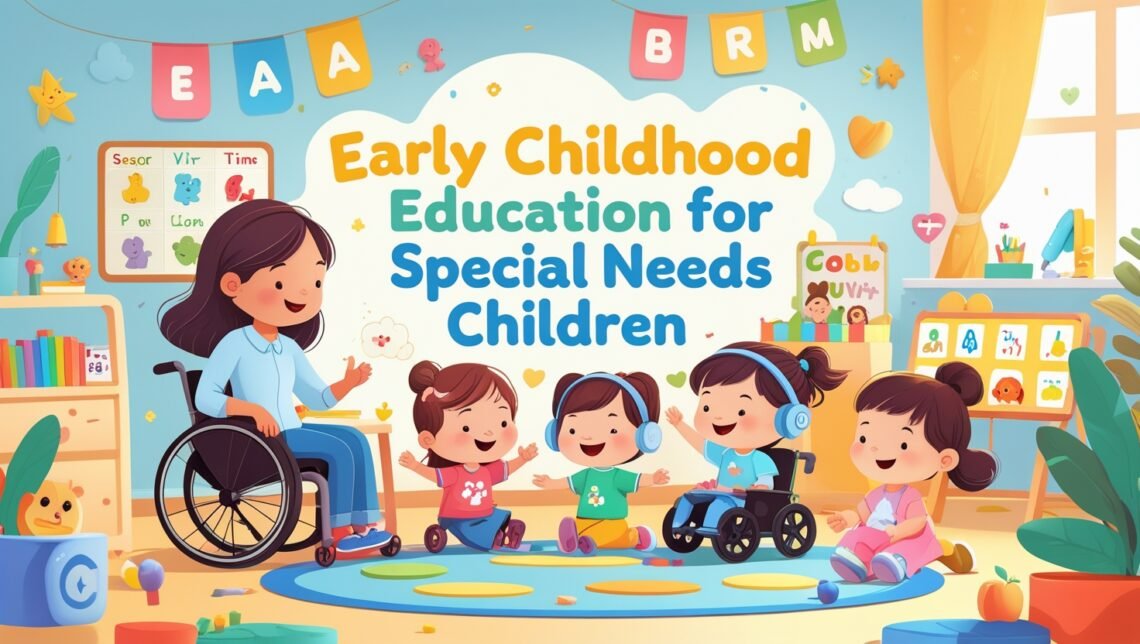
Early childhood education refers to the education given to a child when he or she is young, usually between 0 and 6 years of age. This education becomes even more important when it comes to children with special needs. Children with developmental delays, physical disabilities, or learning challenges can have a better quality of life if they are given the right support early on. Early education serves as a foundation for these children, where they are taught to develop social skills, basic communication, and learning habits.
The brain is most receptive at this age, and if proper guidance is received at that time, not only will their cognitive abilities be enhanced, but their confidence will also develop. Inclusive and structured programs, where teachers are specially trained, give these children the opportunity to learn at their own pace. These programs are not just limited to education but also target behavioral therapy, speech development, and motor skills.
When a special child gets support and understanding right from the beginning, he or she performs better even during difficult stages of life. Therefore, early childhood education is not just a phase but an important investment that secures a brighter future for every special child.
Identifying Special Needs at an Early Age:
Every child grows in his or her way, but there are certain signals that tell parents and doctors that the child may need special help. Recognizing special needs at an early age is very important because the sooner the diagnosis is made, the better the support plan can be made. Special needs can include autism, ADHD, Down syndrome, learning disabilities, speech delays, or motor skill issues.
Parents have a very central role at this stage. If the child is not learning age-appropriate skills, such as speaking, walking, or interacting with people, these can be alarming. Pediatricians and early childhood specialists identify these signs and then confirm the issue through assessment. Developmental screening tools are used in this process, where each skill is assessed.
The advantage of early identification is that the child receives immediate interventions. If a child is not able to speak even at the age of 2, speech therapy can be started. If motor skills are weak, occupational therapy may help. When the child starts getting therapy and support at a young age, his learning and adaptation power increases. Therefore, it is very important to understand that early diagnosis is not a label of a problem, but rather it is the first step towards addressing its problem.
Customized Learning Approaches for Special Children:
Every child with special needs is different, so one type of teaching strategy may not work for them. Customized learning means that the lessons are designed for each child, taking into account their abilities, interests, and challenges. Individualized Education Plans, or IEPs, are created at early education centers that offer inclusive and special education. An IEP is a written plan that outlines each child’s goals, support systems, and learning techniques.
These plans are created by teachers and therapists and often include input from parents. The goal is to give the child the environment and technique that best suits him or her. Some children are visual learners, others are suited to tactile or hands-on learning. Some people do not understand verbal instruction but learn quickly from images and activities.
Customized approaches also use learning aids such as flashcards, speech devices, sensory toys, and technology tools. Teachers create classrooms where there are fewer distractions and more support. When a child learns at his or her own pace and has opportunities to repeat, he or she progresses naturally. This method not only helps in his academic growth but also improves his self-esteem and motivation.
The Role of Parents and Educators in Early Intervention:
The most important role in early intervention is that of parents and educators. When a child is born with special needs or any developmental delay is noticed, the first step is for the parents to understand and accept this. After acceptance, the support the child gets from home and school forms the foundation for his/her future. Parents should be actively involved in every step of their child’s life. Their every feedback, every observation is important for the teachers who are making learning plans.
The role of teachers and educators is also very sensitive and crucial. They not only give courage but also emotional support. They understand that every child is on a unique journey and they should not criticize them but encourage them. The stronger the teacher-student bond, the more effective the learning.
When parents and educators work together as a team, the child adapts very easily. If the parents continue the exercises and therapies given by the school at home, then learning becomes faster. This partnership is that bridge that gives the child a balanced and stable learning environment. For this reason, early intervention is effective only when there is cooperation and dedication from both sides.
Benefits of Early Education for Lifelong Growth:
Early education is not just a means of learning for special needs children, but it is the basis for making every stage of their lives easy and productive. When a child receives structured and targeted education at an early age, he develop self-confidence, communication skills, and emotional control. This helps him perform better in the school environment and also strengthens peer relationships.
Early education for special needs children strengthens their basic skills such as speaking, understanding, remembering things, and problem-solving. These skills are useful in every field of life, be it school, the workplace, or the home environment. Children who have received early support have greater adaptability and resilience.
Apart from this, early education also develops self-help skills in these children, such as wearing their clothes, managing things, or completing simple tasks. When a child does even small things on his own, his sense of self-worth increases.
It has also been observed that those who receive early education and therapy have an easier transition to mainstream schools, and they get more independence in making life decisions. Thus, early childhood education plays a strong role in shaping their entire life.
Conclusion:
Early childhood education opens up a new avenue for children with special needs where they have the opportunity to understand, learn, and grow. When they get structured support and attention from a young age, their self-esteem becomes strong, and they try to overcome their disabilities. Early intervention is important not only for academic achievement but also for emotional and social development.
If parents, teachers, and the community work together, every special child can get a healthy and balanced environment. It is important that we don’t just look at their shortcomings but focus on their potential. We should give them the tools and opportunities that any normal child gets. When we make them an equal part, they emerge as productive members of society.
In today’s era, it is the need of the hour to develop inclusive and accessible education systems. Every child, irrespective of their background or condition, has the right to quality education. We must come together and create such a system that doesn’t just give trouble but also teaches the art of living life. Early support is a ray of light that brightens the future of special children.
FAQs:
- Why is early childhood education important for special needs children?
Early childhood education is crucial for special needs children because the brain is most receptive to learning during the early years (ages 0–6). At this stage, if children with developmental delays or disabilities receive proper guidance, they can build strong cognitive, social, and communication skills. Early education creates a solid foundation that helps them succeed academically and emotionally throughout life. - How can parents recognize special needs in their child at an early age?
Parents should observe their child’s development closely. If a child struggles with speaking, walking, making eye contact, or responding to instructions by the expected age, it may be a sign of special needs such as autism, ADHD, or speech delay. Early diagnosis is important, and parents are encouraged to consult pediatricians or child development specialists for proper screening and assessment. - What are customized learning approaches, and how do they help special children?
Customized learning approaches involve tailoring lessons to suit each child’s individual needs, interests, and learning styles. Special education centers create Individualized Education Plans (IEPs) for this purpose. These plans use tools like visual aids, sensory toys, and hands-on activities to help the child learn more effectively. When learning is personalized, the child’s academic performance and confidence both improve. - What role do parents and teachers play in early intervention?
Parents and teachers are essential partners in early intervention. Parents must accept and support their child’s condition, while teachers provide structured guidance and emotional support in the classroom. When both work as a team sharing feedback, continuing therapies at home, and staying involved the child benefits from a consistent and stable learning environment, which boosts development. - What long-term benefits does early education provide to special needs children?
Early education helps children develop essential life skills like communication, problem-solving, emotional regulation, and independence. These abilities make it easier for them to transition into mainstream schools, form healthy relationships, and adapt to different environments. Long-term, it increases their chances of leading a more independent, confident, and fulfilling life, both socially and professionally.