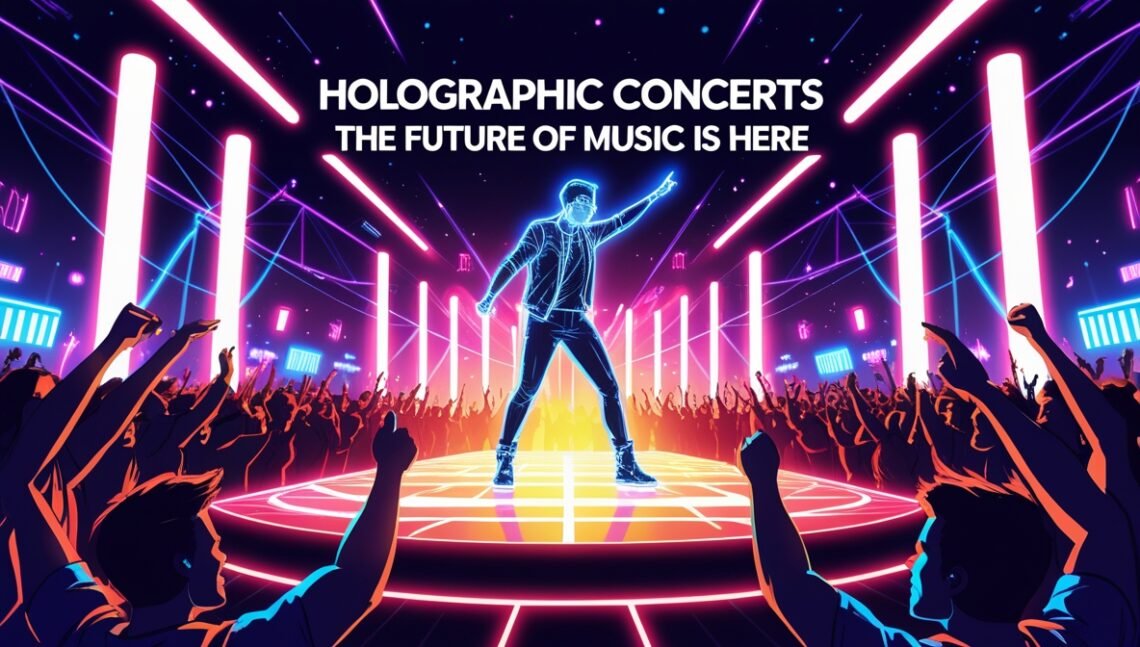
I’ll never forget the first time I saw a hologram of an artist who’d passed away years before. It was at a music festival, rain pouring, crowd buzzing, and suddenly, there he was: larger than life, performing like he never left. People around me cried. Some cheered. Others just stood there, completely still, as if seeing a ghost. I was one of them. That night, I realized something: holographic concerts aren’t just a gimmick. They’re emotional time machines. They’re rewriting what it means to experience music, love, and loss, all through the glow of light and code.
Why This Isn’t Just “Fancy Projection”
When people hear “hologram concert,” they often think of cheesy sci-fi or overhyped festival stunts. I get it. I thought the same until I sat in the fifth row at a Tupac hologram show.
It wasn’t just a flickering image. It felt… present. Alive. The way the light caught on non-existent sweat. How the “artist” moved across the stage, pausing as if feeding off the crowd’s energy.
This isn’t a pre-recorded video slapped onto a stage. It’s a painstaking blend of:
- AI-reconstructed movement
- 3D animation based on hours of archived footage
- Real-time motion tracking synced with live musicians
It’s not about replacing artists. It’s about preserving them.
The Tech Behind the Magic:
Remember those old haunted house tricks with mirrors and glass? That was Pepper’s Ghost. This is different.
Holographic concerts use a mix of projection mapping, depth sensors, and sometimes even lasers to create figures that look and feel dimensional. Some setups use holographic fans or transparent screens. The best ones? You literally can’t tell what’s creating the illusion.
I spoke to a tech director backstage at one of these shows. He told me, “We’re not projecting an image. We’re placing a person on that stage. The goal is to make you forget how it’s done.”
And honestly? You do.
Why Artists & Estates Are Betting on Holograms:
It’s easy to dismiss this as creepy or cash-grabby. But step into the shoes of a late artist’s family.
How do you keep their legacy alive when new fans are born every day? How do you let people experience their magic firsthand?
Holographic concerts offer:
- A new revenue stream that funds music preservation
- A way to introduce classic artists to Gen Z and beyond
- Emotional closure for fans who never got to see them live
I’ll never forget watching a grandmother explain to her granddaughter who Whitney Houston was, right as her hologram began singing. That’s more than a concert. It’s education. It’s healing.
The Debate No One’s Having:
Here’s where it gets messy. What happens when we can digitally recreate anyone? Do we need permission? What if an artist never agreed to this?
Some estates fully endorse it. Others are fighting it in court. And fans? They’re divided. Purists call it disrespectful. Futurists call it evolution. I call it complicated.
Because yes, it’s incredible to “see” Freddie Mercury command a stage again. But should we?
The Future Isn’t Coming, It’s Already Here:
We’re already moving beyond posthumous tours.
Live artists are using holograms to:
- Perform “duets” with past versions of themselves
- Be in two places at once (hello, world tours without travel)
- Create immersive worlds where the stage extends into the crowd
I’ve seen a pop star split into three holograms, each singing a different harmony. I’ve seen a rapper “interact” with an animated universe behind him. This isn’t concert visuals. This is theatre. This is art.
The Bottom Line:
Holographic concerts aren’t replacing live artists. They’re expanding what live music can be. They’re giving us back people we thought we’d lost. They’re letting artists dream bigger than ever.
And they’re reminding us that music doesn’t just live in notes, it lives in moments. Even if those moments are made of light.
FAQs:
1. How much does a holographic concert cost?
Between $100,000 to over $1 million, depending on complexity.
2. Can any artist be holographed?
Only if there’s enough high-quality footage to model from.
3. Do holograms interact with the audience?
Not yet, but AI is getting scarily close.
4. Are the vocals live or recorded?
Usually pre-recorded, backed by live bands or tracks.
5. Is this the end of live tours?
No, it’s a new format, not a replacement.
6. Can you tell it’s not real?
From a distance, it feels real. Up close, you might see the tech, for now.