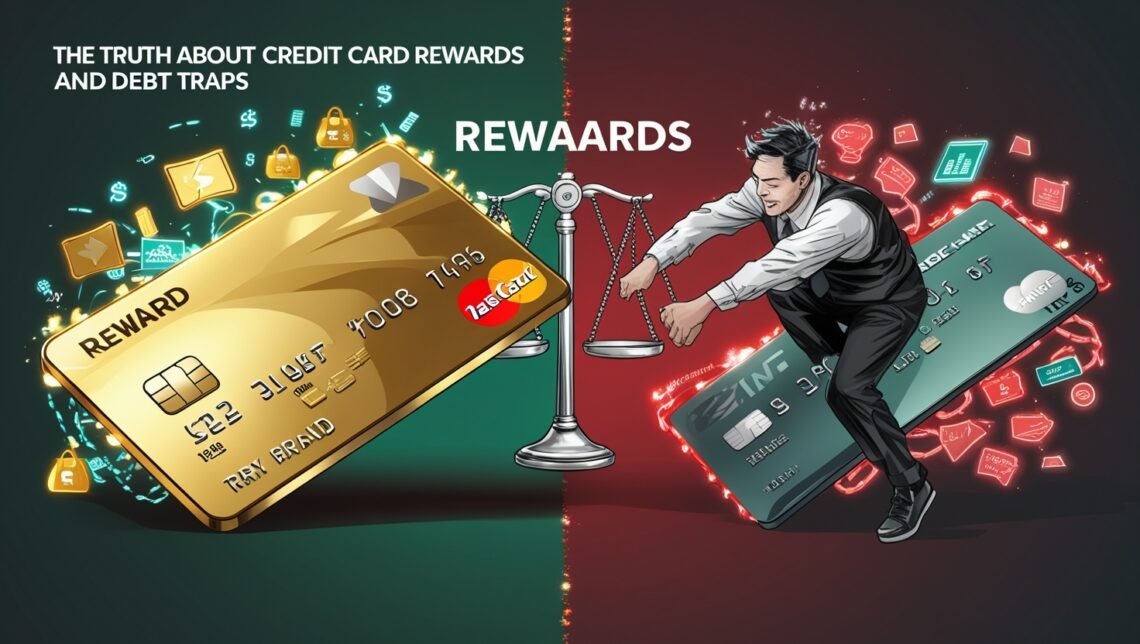
Everyone has credit cards these days, and their use has become a part of the modern lifestyle. On one hand, they help you in emergencies, make online shopping easy, and also offer reward points. On the other hand, if they are not used properly, they push you into such debt from which it becomes difficult to get out. They are called a double-edged sword because they can give you peace as well as stress. Credit card companies give offers like cashback, reward points, air miles, and discounts to attract you. People fall for these offers and spend without thinking that they are earning a reward. But in reality, they are spending their future income on today’s expenses. When the time for repayment comes, they have to pay not only interest but also penalties. This introduction forms the base of this blog, where we will see how reward programs look attractive, but in reality, they trap people. This section explains why you should treat credit cards as a tool and not as a luxury. As easily as you are given credit, just as easily you become burdened with it if there is no planning and control.
How Credit Card Reward Systems Work:
Credit card reward systems are designed to motivate users to use their cards more. When you buy something with your card, you get points, cashback or sometimes air miles. These rewards accumulate faster the more you spend. Companies adopt this strategy because they want you to spend every day on their card. You can do everything from grocery shopping to vacation bookings with your card so that you keep getting points and that too with loyalty. But behind this loyalty, there is a marketing trap where users end up spending more than necessary just for the sake of rewards.
Generally, the conversion rate of reward points is low, but the user feels that he is earning something. It also happens that by the time your points become worth redeeming, you have already paid out more money in interest and fees. Reward systems also run time-limited offers and bonus programs, which increase the psychological pressure on the consumer not to “miss the offer.” This system is a behavioral trap that takes you from controlled and calculated spending to emotional and impulsive spending. Until you understand this mechanism, you think that you are winning when in reality, you are losing more.
The Hidden Costs Behind the Perks:
While people are excited about credit card rewards, they often overlook the hidden costs that are more expensive than these rewards. Credit card companies lure you into spending by promising cashback and rewards, but if you do not clear your entire bill on time, interest rates start charging, which can go up to 30%. Apart from this, many cards have annual fees that can be more than your rewards. If you make a late payment, there are separate penalty charges, and if you cross the limit, there are over-limit fees as well. The common user is not even aware of all these charges; he only sees the figures of the rewards.
When he redeems the points, he realizes that he spent Rs. 2 lakhs for a reward of Rs. 10,000. Companies write such terms and conditions that are long and technical that a common man cannot read them properly. This system of hidden costs impacts your wallet and puts you under financial pressure. You feel that you are making a smart financial move, when in reality your money is being silently leaked in small charges and interests. Unless the user analyzes these things consciously, he remain happy just by seeing the surface-level benefits.
The Hidden Costs Behind the Perks:
While people are excited about credit card rewards, they often overlook the hidden costs that are more expensive than these rewards. Credit card companies lure you into spending by promising cashback and rewards, but if you do not clear your entire bill on time, interest rates start charging, which can go up to 30%. Apart from this, many cards have annual fees that can be more than your rewards. If you make a late payment, there are separate penalty charges, and if you cross the limit, there are over-limit fees as well. The common user is not even aware of all these charges; he only sees the figures of the rewards. And when he redeems the points, he realizes that he spent Rs. 2 lakhs for a reward of Rs. 10,000.
Companies write such terms and conditions that are long and technical that a common man cannot read them properly. This system of hidden costs impacts your wallet and puts you under financial pressure. You feel that you are making a smart financial move, when in reality your money is being silently leaked in small charges and interests. Unless the user analyzes these things consciously, he remain happy just by seeing the surface-level benefits.
Debt Traps – How Small Balances Turn Into Big Problems:
A debt trap means a financial situation where you start with a small liability, but slowly the debt grows so much that it becomes difficult for you to get out of it. The credit card system is designed in such a way that you think you are safe by making the minimum payment, but in reality, your principal amount remains the same for a long time, and only the interest increases. Often people make the mistake of putting small purchases on the card, such as food, clothing, or fuel. Then he makes the minimum payment, but next month he makes new expenses on the same card.
This way, the balance keeps increasing and the interest gets compounded. When the time comes, your balance increases so much that you are only paying the interest, and the actual loan is not being paid. Many people pay the bill of the first card first from the other credit card; this way a cycle is formed which is called a debt trap. This trap affects not only your finances but also your mental health and stress level. The disadvantage of this is that when you want to save for some financial goal, everything goes into these reasons. This section explains how a small negligence can put you in a dangerous cycle from which it becomes difficult to get out.
Tips for Using Credit Cards Responsibly:
Credit cards can become a valuable part of your financial toolkit if used wisely. First of all, never leave your bill on minimum payment. Always try to pay the full amount on time so that you can avoid interest charges. Secondly, never spend just for rewards. If you are buying something just to get points, then you are making emotional decisions, not financial ones. Allocate a part of your monthly budget to credit cards and never exceed that limit. Whenever possible, use apps or statements to track your card spending so that you know where and how much you are spending. Always avoid late payments; it is better to turn on the auto-pay system for this.
If you are using multiple cards, keep a proper record of their due dates and interest rates. Before taking cards with an annual fee, calculate whether you will get that much reward from it or not. Never clear someone else’s bill from one card as it puts you in a cycle. Responsible usage means that you should treat the card as a convenience, not as a source of free money. This discipline can give you both financial control and peace.
Conclusion:
The final point of this blog is that credit cards have both convenience and risk in. It is in your hands how you use them. If you use them just because you are getting rewards, then you sometimes end up spending more than your real needs. This short-term benefit can turn into a long-term financial burden if you ignore interest, penalties, and fees. The best way is to calculate and plan every transaction. The real benefit of credit cards is when you pay bills on time, avoid unnecessary spending, and do not cross your limit.
For rewards, if you maintain self-discipline and a budget, you can get maximum benefit from a credit card without falling into the debt trap. It is important that you bring out your financial literacy so that you can avoid marketing traps and emotional spending. In today’s time, credit cards have become a necessity, but it is not necessary that you run after every offer. Conclusion: Only smart spending and financial planning can keep you in balance, where you can enjoy the rewards and stay away from debt. This is the truth about credit cards: there is peace if you use them wisely, and there is also stress if you use them wrongly.
FAQs:
1. How do credit card reward systems work, and are they really beneficial?
Credit card reward systems give users points, cashback, air miles, or discounts for making purchases. The more you spend, the more rewards you earn. While these perks seem beneficial, they are designed to encourage more spending. Often, the value of rewards is much lower than the total amount spent or the interest paid. Many users fall into the trap of spending unnecessarily just to earn points, making the rewards less beneficial than they appear on the surface.
2. What are the hidden costs associated with credit cards?
The most overlooked costs include high-interest rates (sometimes up to 30% annually), annual fees, late payment penalties, and over-limit charges. These fees often outweigh the value of any rewards earned. Additionally, many users are unaware of complex terms and conditions tied to offers, which can lead to unexpected charges. These hidden costs silently drain your finances and create a false sense of financial benefit if not monitored closely.
3. What is a credit card debt trap, and how does it start?
A credit card debt trap begins when a user starts carrying small balances and only pays the minimum due. This leads to compounding interest while the original amount remains unpaid. Over time, users keep making new purchases, and the debt keeps growing. Some even use one card to pay off another, entering a dangerous cycle. Eventually, it becomes difficult to manage, leading to mental stress and long-term financial instability.
4. How can I use credit cards responsibly to avoid falling into debt?
To use credit cards wisely, always pay your full bill on time, never rely on minimum payments. Avoid spending just for rewards, and stay within a fixed monthly budget. Track your spending regularly through apps or statements. Set up auto-pay to avoid late fees, and be cautious with cards that have high annual fees. Lastly, never use one card to pay another’s bill. Responsible use means treating your card as a tool, not as a source of free money.
5. Are credit cards worth using if they come with so many risks?
Yes, credit cards can be extremely useful if used with discipline. They provide convenience, help build credit history, and offer perks like cashback and travel benefits. The key is to control your spending, avoid interest charges by paying in full, and stay informed about fees and terms. If used smartly and within a budget, credit cards can support your financial goals. But misuse, emotional spending, or chasing rewards blindly can quickly lead to debt and financial stress.